


Driveway Drainage & Repairs in Crewe
Standing water, sunken patches, a drive that sheds water toward the house or the neighbour. We diagnose and fix driveway drainage across CW1 and CW2, and on Crewe's clay, the fix is rarely the one people expect.
Driveway Drainage Across CW1 & CW2
Why Crewe Driveways Hold Water
A driveway that puddles has one of three problems: nowhere for the water to go, no fall to send it there, or a sub-base that has already given up. Working out which one you have is the whole job.
Most of Crewe sits on Cheshire Plain boulder clay. Clay holds water instead of releasing it, and that single fact explains most of what goes wrong with driveways in this town. A soakaway that would empty in an hour on free-draining ground fills up here and stays full. A thin sub-base that would be perfectly adequate elsewhere stays saturated through the winter, softens, and then compresses under the weight of a car until you have ruts and dips. By the time a driveway is visibly sinking, water has usually been in the base for two or three winters.
The Three Faults We Find Most Often in Crewe
No outfall. On Victorian and Edwardian properties around Coppenhall and off Nantwich Road, the original gully has often silted solid or been paved straight over during an earlier driveway job. The water has nowhere to go because the only route it ever had was closed.
Wrong fall. More common than it should be. A drive laid dead level holds water across the middle; a drive laid falling toward the house delivers it to the threshold and, on a low doorstep, through the door. Fall is set at base stage and cannot be added afterwards with a bag of sand.
Failed base. Rutting in the wheel tracks, dips near the road edge, blocks or slabs sitting proud of their neighbours. This is water in the sub-base plus traffic load. Drainage alone will not lift a drive back up once it has settled.
What Actually Fixes It
Where the surface is sound, targeted work solves it: a channel drain cut in across the low point and connected to a working outfall, a silted gully reinstated, a land drain run along the boundary edge, or a single sunken area lifted, re-based and relaid. These are one- or two-day jobs and they are the right answer far more often than a full replacement.
Where the base has failed across the drive, the honest answer is a rebuild, and the opportunity in that is to build it permeable. A permeable driveway stores water in a designed sub-base under the whole surface and releases it slowly, which is a far more reliable arrangement on clay than a single soakaway pit. We fit permeable block paving and permeable tarmac, both of which look near-identical to their sealed equivalents from the pavement.
Water and Your Neighbours
You are not entitled to concentrate surface water and send it onto a neighbouring property, and a sealed frontage where a garden used to be is exactly how that starts. It is one of the more unpleasant disputes we get called into, and it is entirely avoidable at design stage. Keeping water within your own boundary, permeable build-up, correctly sized soakaway, or a channel drain to a legitimate outfall, is not an optional extra on a Crewe frontage.
What the Survey Involves
We look at where water arrives, where it currently sits, and where it could legitimately go. We check falls with a level rather than by eye, look for a gully that may have been buried, and dig a trial hole to see the condition of the sub-base and how the ground behaves below it. You get a written quotation with the diagnosis in it, not just a price.
- Free drainage survey across all CW1 and CW2 postcodes
- Diagnosis before quotation, with a trial hole and levels taken
- Targeted repairs where the surface is sound, not automatic replacement
- Channel drains, gullies and land drains connected to real outfalls
- Permeable rebuilds that store and release under the whole drive
- Sunken areas lifted, re-based and relaid in matching materials
- Winter work, drainage and groundworks run through the cold months
- Written workmanship guarantees on every installation
Water Reaching the House?
If water tracks toward a threshold or an air brick, treat it as urgent rather than cosmetic. A threshold drain and corrected falls are a small job compared with what saturated brickwork costs. Call 01270 895150 and we will get someone out to look.
Tarmac Breaking Up?
Potholes, crumbling edges and cracking on a tarmac drive are usually water getting in and freezing. See tarmac repairs for patching, edge reinstatement and resurfacing options.
Rebuilding Anyway?
If the base has gone, build the replacement properly. Block paving in Crewe sets out how we construct for this ground, including permeable options that solve the drainage at the same time.
Drainage & Repair Options in Crewe
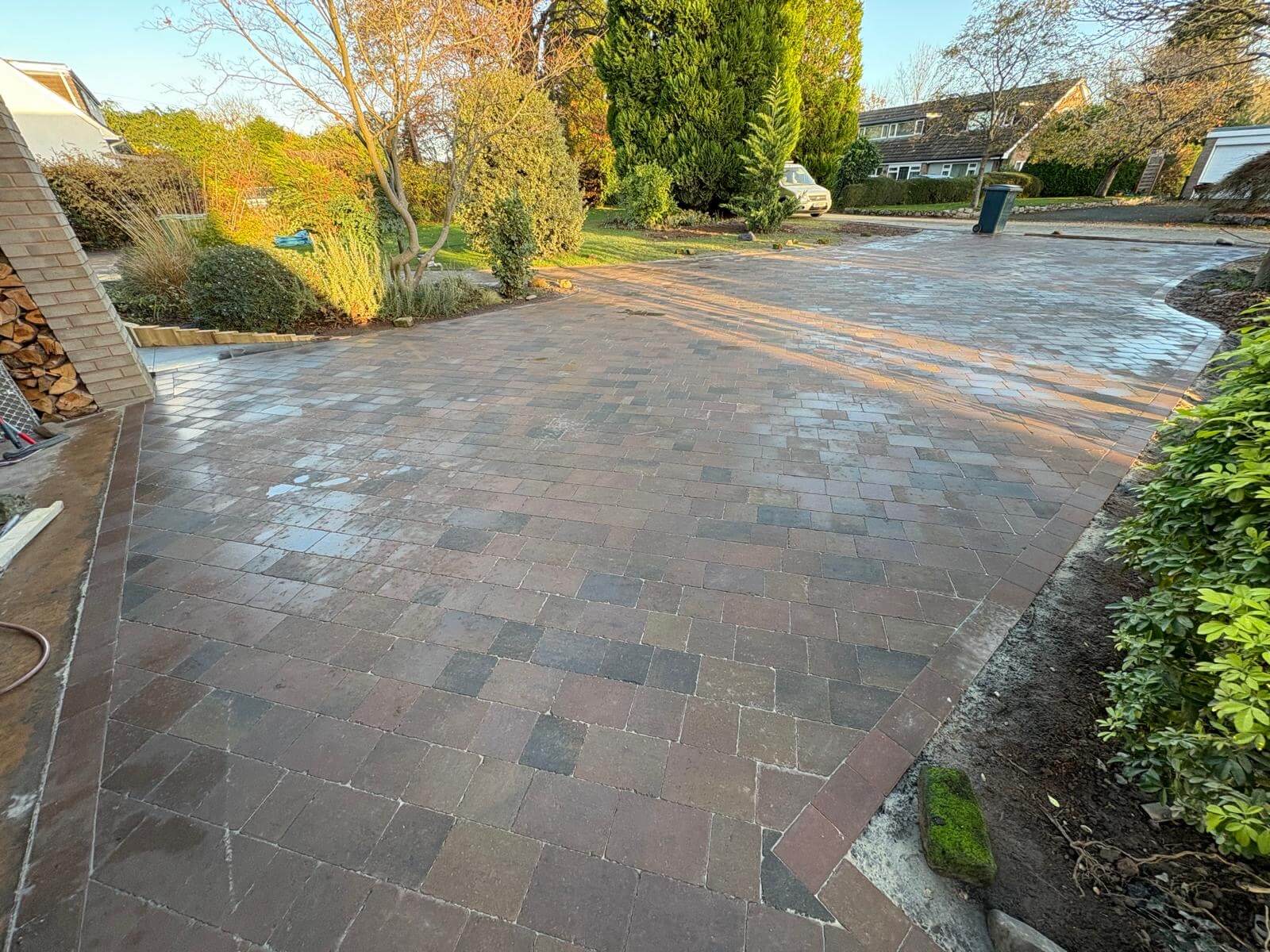
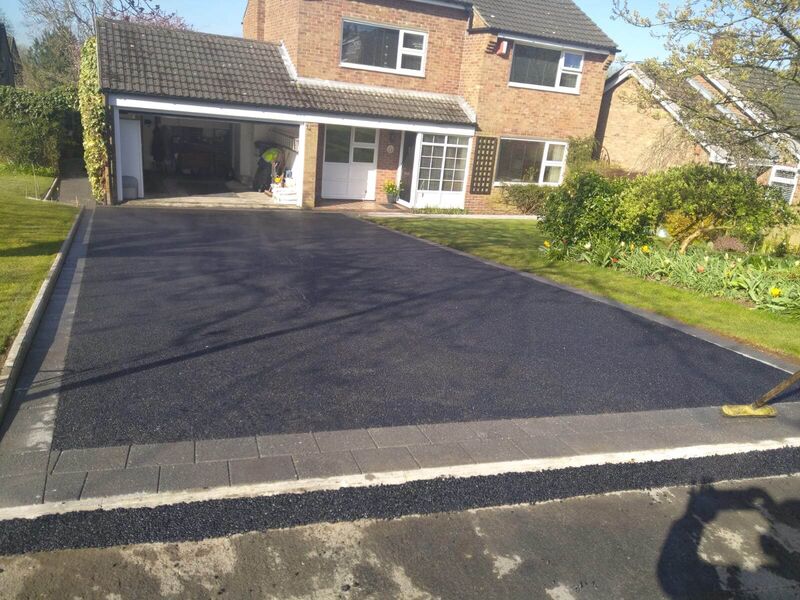
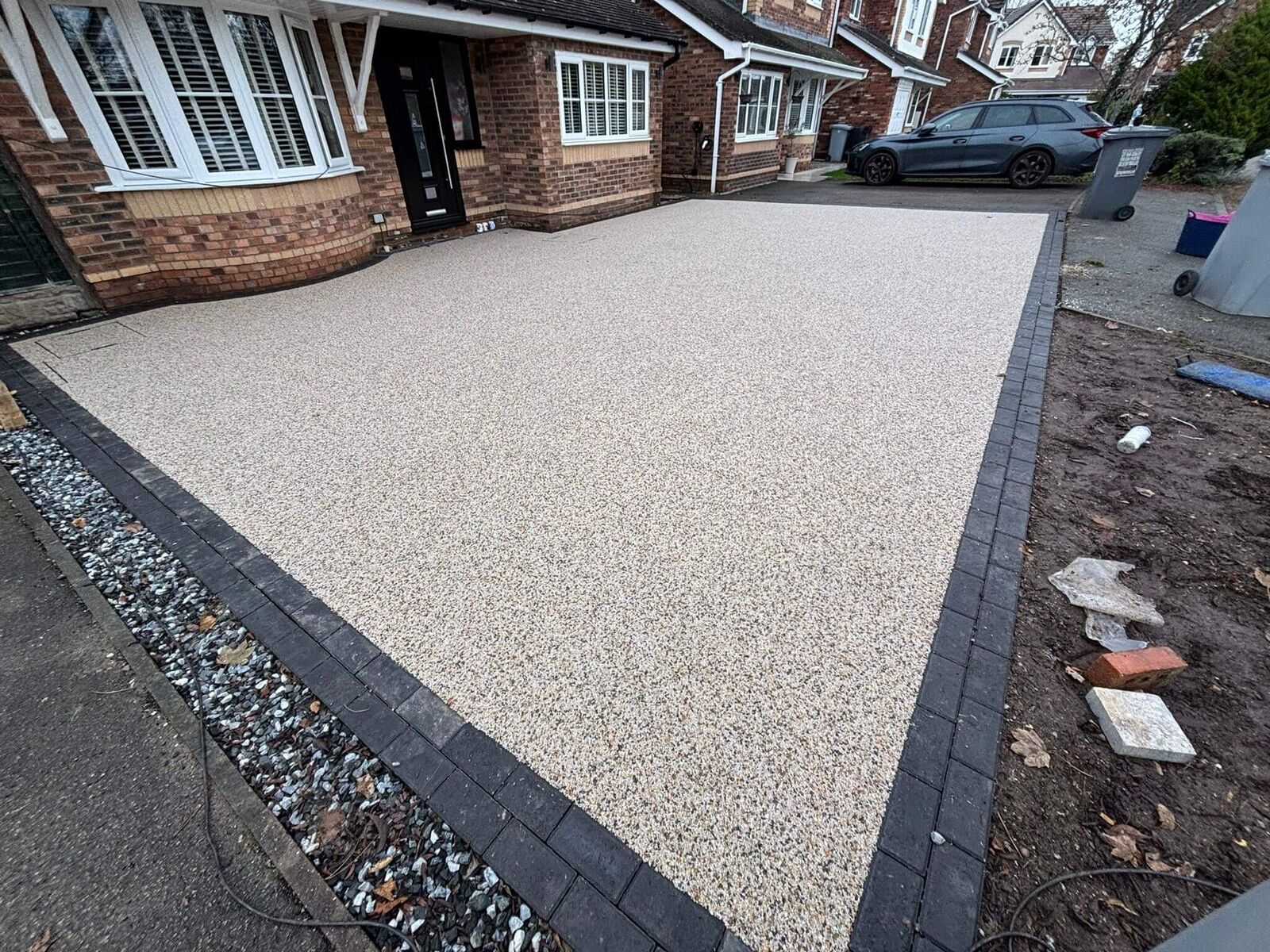


How We Deal With a Flooding Driveway in Crewe
Diagnosis first. Quoting a channel drain for a drive whose sub-base has collapsed helps nobody, and neither does quoting a full rebuild for a blocked gully.
1. Survey and Diagnosis
Where does water arrive from, where does it sit, and where could it legitimately go? Falls checked with a level, not by eye. We look for a buried or silted gully, and we check whether water is being sent toward the house, a boundary or a neighbour.
2. Trial Hole
A small dig tells us the depth and condition of the existing sub-base and how the ground below behaves. It is the difference between a targeted repair and a rebuild, and it is why we do not quote drainage work over the phone.
3. Written Diagnosis and Quotation
You get the fault, the options and the price in writing. Where a cheaper targeted repair will genuinely solve it, that is what we quote. Where it will not, we say so and explain what will.
4. Excavation and Outfall
Channel drains cut in, gullies reinstated, land drains laid to falls, soakaways formed and sized where the ground supports one. Everything is connected to an outfall that actually works, and spoil goes under our waste carrier registration.
5. Base Repair or Permeable Rebuild
Sunken areas lifted, base repaired and recompacted, surface relaid in matching materials. Where the whole drive has gone, we rebuild with a permeable storage sub-base so the drainage is solved by the construction rather than bolted on.
6. Testing and Handover
We flood-test the finished falls with a hose before we leave, so you can see where the water goes rather than waiting for the next storm to find out. Written workmanship guarantee issued on completion.
Why Call Us for Drainage
Diagnosis, Not Guesswork
Levels taken and a trial hole dug before anyone quotes. Drainage faults get misdiagnosed constantly, and the repair then fails.
We Know This Clay
29 years on Cheshire Plain boulder clay. We know why soakaways disappoint here and what to build instead.
Repair Where We Can
If a channel drain and a reinstated gully will fix it, that is what we quote. We do not sell rebuilds to solve blocked outfalls.
Winter Work
Drainage and groundworks carry on through the cold months, and a wet week actually helps us see where the water goes.
Driveway Drainage in Crewe — Common Questions
Why does my Crewe driveway flood or hold puddles?
Almost always because the water has nowhere to go and the ground will not take it. Most of Crewe sits on Cheshire Plain boulder clay, which holds water rather than releasing it, so a soakaway that would work on sand or gravel simply fills up and stays full. Add a driveway laid to no fall, or laid falling toward the house, and the water sits. On older Coppenhall and Nantwich Road properties there is often a third factor: the original gully has silted up or been paved over entirely, so the only route the water ever had has been closed off.
Can you fix the drainage without replacing the whole driveway?
Frequently, yes. If the surface is sound and the problem is that water has nowhere to go, cutting in a channel drain across the low point and connecting it into a working outfall solves it without touching the rest of the drive. Adding or reinstating a gully, forming a proper fall on a short section, or installing a land drain along one edge are all targeted repairs. What cannot be repaired in isolation is a sub-base that has failed across the whole area, if the drive is rutting and sinking generally, patching the drainage is money spent twice, and we will tell you that plainly.
My driveway is sinking in patches. Is that a drainage problem?
Usually it is the end result of one. Water gets into the sub-base, softens it, and traffic loads then push the surface down into the soft spots. That is why sinking so often appears in wheel tracks and next to the road edge first. The repair depends on how far it has gone: a single sunken area over an otherwise sound base can be lifted, the base repaired and recompacted, and the surface relaid. Widespread settlement means the base was never built for the ground and the drive needs rebuilding, this time with drainage designed in at base stage.
How much does driveway drainage cost in Crewe?
As a rule of thumb, adding a soakaway or channel drain to an existing driveway typically runs from £500 to £1,500 depending on complexity, run length and where the outfall is. A localised sunken area lifted, re-based and relaid is usually a day or two of work. A full rebuild with a permeable build-up is priced as a new driveway. We survey before quoting, because the honest answer depends entirely on where the water can legally and practically be sent, and that is not something anyone can price over the phone.
Do I need planning permission to change my driveway drainage?
You need permission if you are laying more than five square metres of new impermeable surface at the front of a property without directing the water to a soakaway or a permeable area within your own boundary. Fixing the drainage on an existing drive does not usually trigger it. Building a new one does, and it is why permeable construction has become the default answer, it keeps you compliant without relying on a soakaway that Crewe clay would defeat anyway. Crewe falls under Cheshire East Council, and our guide to driveway planning permission in Cheshire covers the detail.
Water from my driveway runs onto next door. Whose problem is it?
Yours, in practice. You are not entitled to concentrate surface water and discharge it onto a neighbouring property, and a sealed frontage that used to be a garden is exactly how that happens. It is also the most common cause of a genuinely unpleasant dispute between neighbours who otherwise got on. The fix is to keep the water within your own boundary: a permeable build-up, a properly sized soakaway where the ground allows, or a channel drain routed to a legitimate outfall. We design for that as standard rather than leaving you to find out later.
Does a soakaway work on Crewe clay?
Sometimes, but far less reliably than people expect, and never as an afterthought. A soakaway only works if the surrounding ground can absorb what you put into it, and boulder clay absorbs very slowly. Where a soakaway is viable we size it from a percolation test rather than a guess, and we set it well away from foundations. Where it is not, a permeable sub-base built to store water and release it slowly does the same job far more reliably, because the storage is under the whole driveway rather than in one pit.
Can drainage work be done in winter?
Yes, and winter is when most people finally decide to sort it out, for obvious reasons. Excavation, channel drains, land drains, gullies and sub-base repairs all carry on through the colder months, and a wet week is genuinely useful because we can see exactly where the water goes. The only element we may hold back is a final surface course in a hard frost. If your drive floods every winter, booking the work in autumn or winter means it is fixed before the next one rather than after it.
We Also Serve Nearby Areas
Drainage problems are rarely confined to the driveway. These pages cover the rest of the plot.
All Cheshire Driveways Crewe Block Paving Crewe Landscaping Crewe Driveways Nantwich Driveways Sandbach Tarmac RepairsStanding Water on Your Crewe Driveway?
Free survey with levels taken and a trial hole dug, then a written diagnosis and quotation. Drainage and groundworks run right through the winter across CW1 and CW2.